
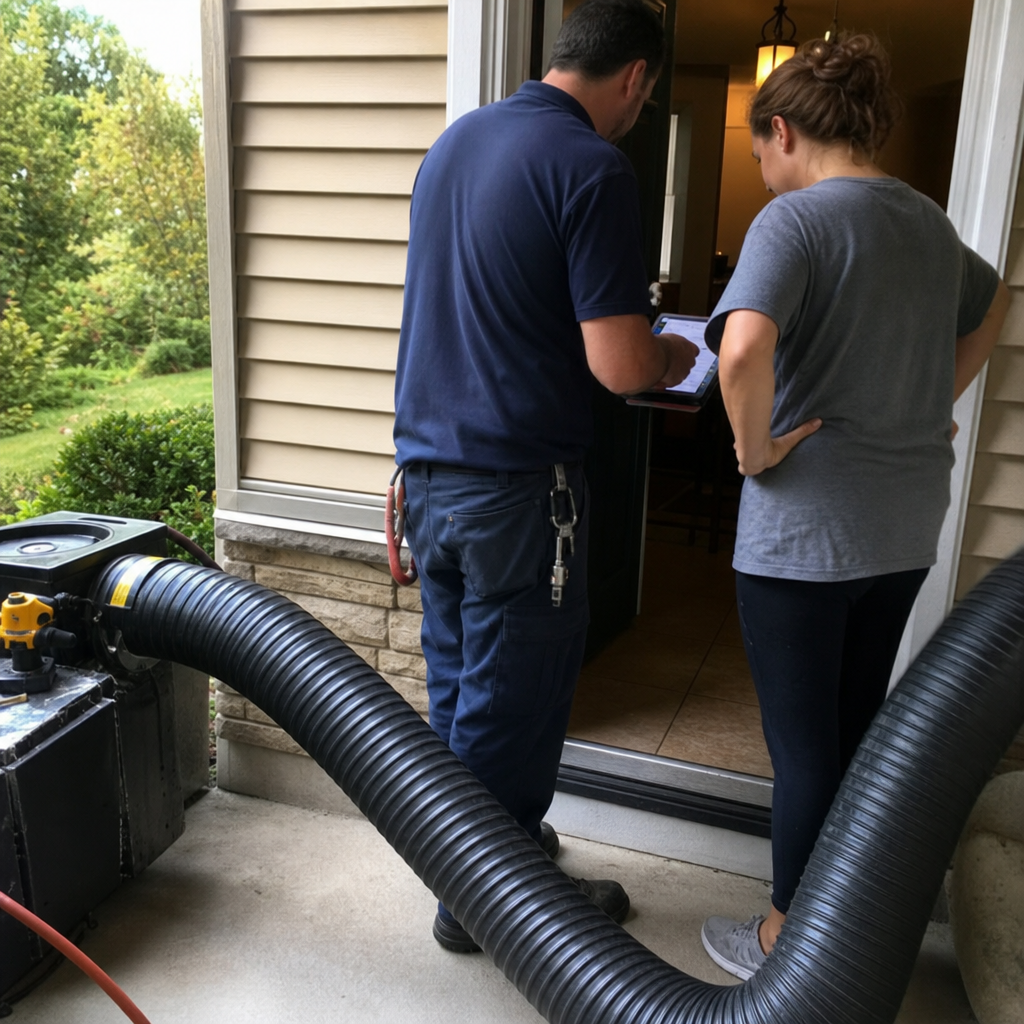
Duct Sealing Cost in Pittsburgh: What You’ll Actually Pay Based on Your Home’s Age and Layout
Professional duct sealing in Pittsburgh typically costs between $1,200 and $3,800 for a complete residential system, with most mid-century ranch homes in the South Hills falling in the $1,600–$2,400 range. Smaller rowhouses and Pittsburgh doubles with limited accessible ductwork often run $900–$1,500, while larger homes with complex retrofitted systems can exceed $4,000. Call (866) 402-3567 for a free, in-home assessment — we price by linear footage and accessibility, not square footage guesses.
Pittsburgh’s housing stock tells a story that directly shapes what duct sealing costs here. When coal furnaces and steam radiators gave way to forced-air systems in the 1950s and 1960s, contractors threaded ductwork through homes never engineered for it — tight crawl spaces beneath hillside foundations, chases carved into finished plaster walls, and cramped attics under steep-pitched roofs. That retrofit legacy means every sealing job in Pittsburgh starts with a puzzle: how much of the system can we physically reach, and what condition did sixty years of river-valley humidity leave it in?
Why Duct Sealing Cost Varies So Much in Pittsburgh Homes
We’ve crawled through enough Pittsburgh basements to know that “standard ductwork” doesn’t exist in this city. The same era of construction produced radically different systems depending on whether a home started as a worker cottage in Lawrenceville, a Pittsburgh double in Bloomfield, or a post-war ranch in Bethel Park. Those structural origins determine labor hours, material quantities, and whether we can even access the leaks.
Here’s what actually drives pricing when we quote duct sealing in Pittsburgh:
- Linear footage of accessible ductwork: Sealing only what’s reachable through basements and utility rooms costs less than chasing leaks through finished walls. Many Pittsburgh rowhouses have 40–60% of their duct runs buried in inaccessible cavities.
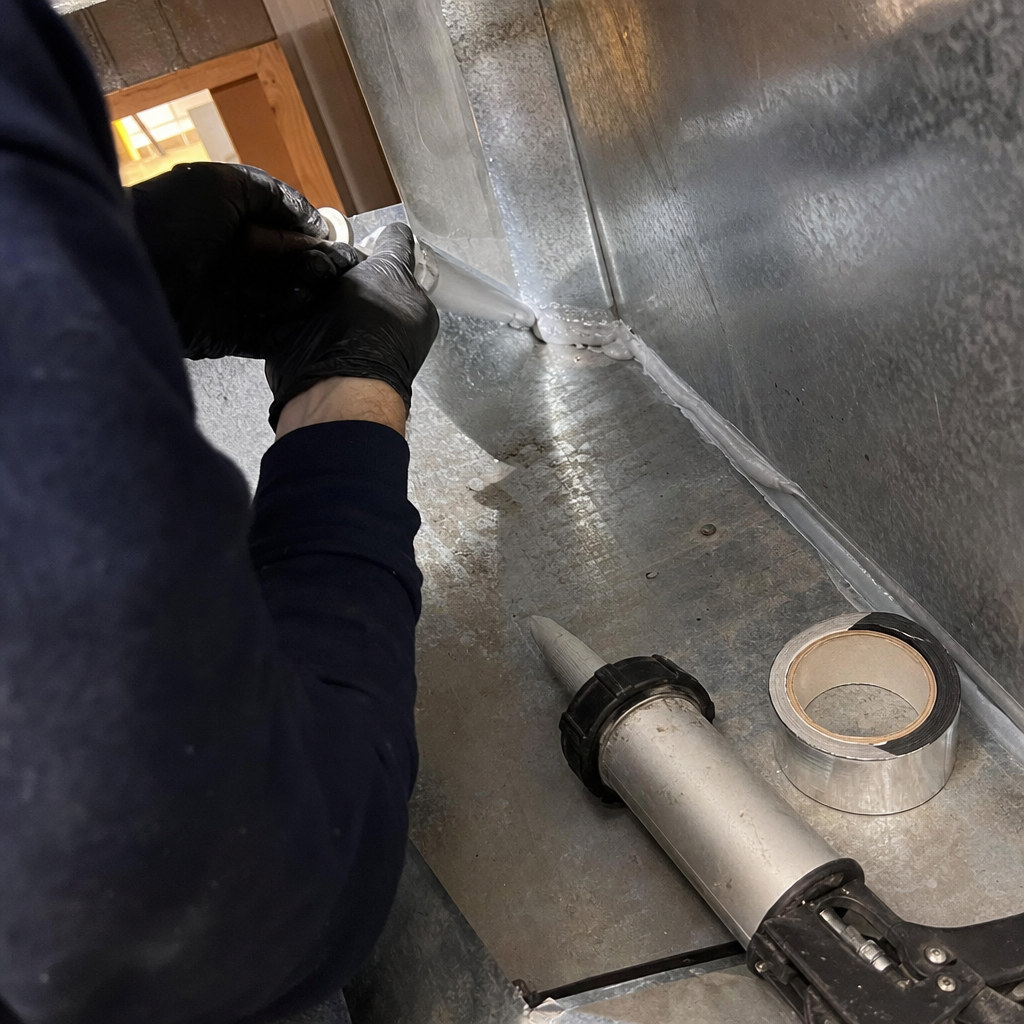
- Joint type and failure mode: Mechanically fastened galvanized trunk lines — common in 1950s–1960s South Hills builds — need mastic and mesh reinforcement at every seam. Flex-duct transitions added during later upgrades often require complete replacement rather than sealing.
- Contamination level: Sealing over dirty ductwork traps debris and degrades sealant adhesion. If your system hasn’t been cleaned in a decade (typical for Pittsburgh homes), cleaning must precede sealing, adding $400–$800 to the total.
- Moisture damage extent: Pittsburgh’s 150+ cloudy days and high humidity mean fiberglass-board-lined takeoffs often delaminate. When the board pulls away from metal, we’re repairing structure, not just sealing seams.
Last month in Mount Lebanon, we opened a return plenum to find the original fiberglass lining had turned to powder — a direct result of decades of humidity cycling through that hillside basement. The homeowner expected a simple sealing job; what the system needed was partial rebuild. That’s why we don’t quote duct sealing over the phone. Eric Bailey inspects every accessible run personally before recommending any scope of work.
Pittsburgh Duct Sealing Cost Breakdown by Home Type
These ranges reflect what we’ve actually charged for completed jobs across Greater Pittsburgh over the past two years. They’re not scraped from national aggregators — they’re our invoices, adjusted for 2024–2025 material and labor costs.
| Home Type & Duct Configuration | Typical Cost Range | What Drives the Variance |
|---|---|---|
| Pittsburgh double / rowhouse (1–2 stories, partial basement, limited access) | $900 – $1,500 | Short trunk lines but buried returns; often 30–50% of system unreachable |
| Mid-century ranch (South Hills, Bethel Park, original 1950s–60s ductwork) | $1,600 – $2,400 | Full basement access, but galvanized trunks with multiple failure modes; fiberglass delamination common |
| Colonial / split-level (retrofitted ducts, mixed materials) | $2,000 – $3,200 | Multiple duct generations; flex-duct additions poorly mated to original metal |
| Large home or complex retrofit (hillside foundation, finished basement, extensive moisture damage) | $3,000 – $4,500+ | Significant rebuild component; possible mold remediation coordination |
| Duct cleaning + sealing bundled (recommended sequence) | Add $400 – $800 | Rotobrush and Nikro cleaning pass must precede sealant application |
The South Hills ranch category deserves particular attention. We’ve probably sealed more 1950s–1960s ranch systems in Mt. Lebanon and Bethel Park than any other configuration in Pittsburgh. These homes have a distinctive failure signature: original galvanized trunk lines with mechanically fastened joints that were never sealed at installation, plus fiberglass-board-lined takeoffs where the board has pulled away from the metal after sixty years of humidity exposure. The trunk lines are usually accessible from the basement, which keeps labor reasonable, but the takeoffs often need rebuild rather than simple sealing. That’s why the range spans $800 — a clean trunk-line sealing job sits at the low end, while multiple delaminated takeoffs push toward $2,400.
The Cleaning-First Rule: Why Sequence Matters More Than Most Contractors Admit
Here’s something we explain on nearly every duct sealing estimate in Pittsburgh, and it’s surprised enough homeowners that we’ve made it standard practice to discuss upfront: sealing over contaminated ductwork doesn’t just trap debris — it actively degrades the sealant’s adhesion and creates a long-term mold risk.
Mastic sealants and aerosol-based duct sealing products require clean metal or properly prepared fiberglass surfaces to bond. When we encounter the typical Pittsburgh system — one that hasn’t been professionally cleaned in 10–15 years, often never — the interior surfaces carry a film of fine particulate, pet dander, and microbial growth. Sealant applied over that substrate adheres to the contamination layer, not the duct wall. Within two to three years, thermal cycling and vibration cause the sealant to release.
Worse, sealing encapsulates existing moisture and organic material. In Pittsburgh’s humidity, that’s a mold incubation chamber. We’ve been called back to homes where another contractor sealed dirty ducts, and the homeowner noticed musty odors intensifying within months. The seal held — it just held moisture and spores inside.
Our process, which we’ve refined over 11 years, runs cleaning before sealing on every job where both services are needed. We use Rotobrush contact cleaning for reachable trunk lines and Nikro HEPA-contained systems for returns and delicate transitions. Only after post-cleaning inspection confirms clean, dry surfaces do we apply sealant. This sequencing adds $400–$800 to the total cost but eliminates the callback risk that cheap “seal-only” quotes build in.
Clean ducts aren’t a luxury — they’re just what the system was supposed to have from the start.
What Pittsburgh’s Climate Does to Ductwork — And Why Sealing Stops the Damage
Pittsburgh’s river-valley geography creates a problem most homeowners don’t connect to their energy bills. Thermal inversions trap vehicle and industrial particulates at ground level, and the American Lung Association has repeatedly given Allegheny County failing grades for particle pollution. Your HVAC intake doesn’t discriminate — it pulls that ambient air through whatever leaks exist in your return path.
But the more insidious problem is humidity. Pittsburgh’s high annual precipitation and persistent cloud cover mean crawl spaces and basements stay damp year-round. When your supply ducts leak under pressure, you lose conditioned air into those spaces. When your return ducts leak under suction, they draw that unconditioned, moisture-laden air directly into your system.
We’ve measured return-side leakage in Pittsburgh basements pulling air at 85–90% relative humidity during summer months. That moisture loads your cooling coil, strains your compressor, and creates condensation points inside ductwork where mold colonizes. Sealing the return path stops that moisture draw. Sealing the supply path stops the energy waste. In a typical South Hills ranch with 25–30% measured leakage, professional sealing often pays for itself in 3–4 years through reduced HVAC runtime — faster if your system has electric resistance backup heat.
In Squirrel Hill last spring, a homeowner called us for cleaning and mentioned her basement always smelled musty when the air ran. We found a 12-inch return trunk with a gaping seam behind the washer — pulling basement air continuously. Sealing that single run eliminated the odor and dropped her summer humidity readings inside the duct by 18%. That’s not an efficiency upgrade; that’s stopping a problem that was actively damaging her home.
How We Assess Sealing Needs — And Why It Happens During Cleaning
Every duct cleaning we perform in Pittsburgh includes accessible-leak identification. Eric Bailey inspects every reachable joint, seam, and transition while the Rotobrush system is running — the airflow itself often reveals whistling leaks that static inspection misses. This isn’t a separate sales call from someone who hasn’t seen your system. It’s the same technician who just spent three hours inside your ductwork, and the recommendation comes with specific locations, photos, and measured airflow data.
We don’t sell sealing to every cleaning customer. Some Pittsburgh systems are tight enough that sealing offers minimal return. Others are so deteriorated that sealing would be cosmetic — partial rebuild is the honest recommendation. Our 4.9-star average across 482 reviews reflects that directness. Homeowners in Dormont, where Eric grew up, and throughout Mount Lebanon and Squirrel Hill know we don’t pad invoices with unnecessary work.
When sealing is appropriate, we provide line-item pricing: per-linear-foot trunk sealing, per-joint takeoff sealing, and per-transition repair or replacement. No package deals that hide what’s actually being done. You’ll know exactly which runs we’re sealing and why.
DIY Duct Sealing vs. Professional: What You Can Check, What You Shouldn’t Touch
We respect homeowners who want to understand their systems. Here’s where the line sits between safe homeowner inspection and work that requires professional equipment and training.
What you can safely check: Visually inspect basement trunk lines for obvious gaps at joints, disconnected flex-duct transitions, or deteriorated tape. Look for dust streaks near seams — they indicate air leakage patterns. Check that all registers are securely connected to duct boots.
What requires professional work: Any sealing inside the duct envelope, aerosol-based whole-system sealing, mastic application in confined spaces, and any work involving fiberglass-lined components. Pittsburgh’s older galvanized systems often have sharp edges from decades of corrosion; cuts from sheet metal in tight crawl spaces are a genuine hazard. More critically, improper sealing can unbalance system static pressure, straining your blower motor and potentially creating backdraft conditions with combustion appliances.
We’ve corrected DIY sealing jobs where homeowners used standard HVAC tape (designed for insulation facing, not duct sealing) that failed within a season, or where well-intentioned mastic application blocked balancing dampers. The cost to fix those mistakes exceeded what professional sealing would have run originally.
FAQs
Most Pittsburgh homeowners pay between $1,200 and $3,800 for professional duct sealing, with the majority of mid-century ranch homes in neighborhoods like Mt. Lebanon and Bethel Park falling between $1,600 and $2,400. Smaller rowhouses and Pittsburgh doubles with limited accessible ductwork typically run $900–$1,500. Call (866) 402-3567 for a free, in-home estimate based on your actual system — we don’t quote over the phone because Pittsburgh’s retrofitted ductwork varies too widely.
Sealing is almost always cheaper than replacement for Pittsburgh’s metal trunk lines — typically 30–50% less than partial duct replacement. However, when we find delaminated fiberglass-board-lined takeoffs (common in 1950s–1960s South Hills homes) or crushed flex-duct transitions, replacement of those specific components becomes necessary. We quote both options when both apply, but we won’t recommend replacement where sealing will solve the problem. Our assessment during cleaning shows you exactly which approach fits your system.
We schedule sealing as a separate visit after cleaning because sealants require clean, dry surfaces to bond properly — and because we need to verify post-cleaning conditions before finalizing the sealing scope. In urgent cases, we can sometimes complete both within a 48-hour window. Call (866) 402-3567 to discuss timing if you’re facing a specific deadline like a home sale inspection.
Signs of significant duct leakage include rooms that never reach set temperature, excessive dust accumulation near registers, musty odors when the system runs, and utility bills that spike without usage changes. In Pittsburgh specifically, basement humidity problems that worsen when HVAC operates often indicate return-side leakage pulling damp air. We measure actual leakage during our cleaning inspection using airflow analysis — not guesswork — and show you the data before recommending any sealing work.
Ready to Stop Paying for Air That Never Reaches Your Rooms?
If your Pittsburgh home has original mid-century ductwork, you’re almost certainly losing 25–40% of your conditioned air to leaks — energy you’re paying for whether it reaches your rooms or not. Meridian Air Duct Cleaning Service Greater Pittsburgh assesses every system personally, quotes by the actual work needed, and sequences cleaning and sealing correctly so the fix lasts. Call (866) 402-3567 today for a free estimate. Eric Bailey, Owner & Lead Technician, handles every inspection himself.
Written by Eric Bailey, Owner & Lead Technician at Meridian Air Duct Cleaning Service Greater Pittsburgh, serving Pittsburgh, PA.