
Honeywell Air Duct Cleaning in Pittsburgh: A Homeowner’s Guide
If your Pittsburgh home has Honeywell air quality equipment integrated into its HVAC system, professional duct cleaning typically runs $350–$800 depending on system size and Honeywell component complexity, and the job should include specific attention to electronic air cleaner cells, media filter housings, and zone damper access points that standard duct cleaning overlooks. A contractor who doesn’t ask about your Honeywell setup before quoting may miss these critical elements entirely. If you’d rather not vet technicians alone, Meridian Air Duct Cleaning Service Greater Pittsburgh handles Honeywell-equipped systems regularly — call (866) 402-3567 for a free estimate.
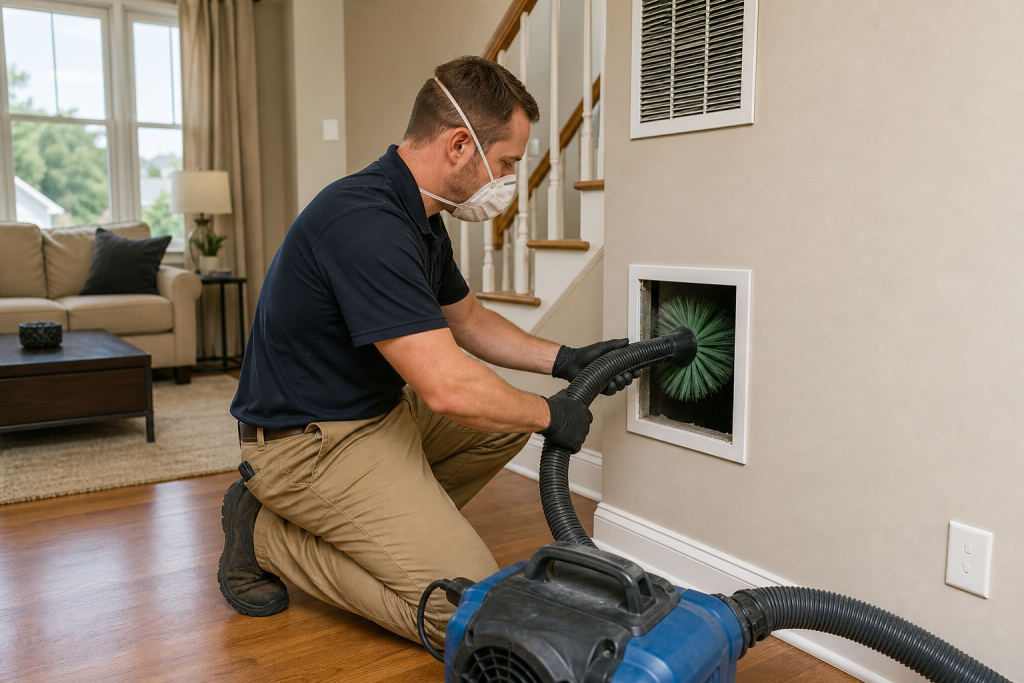
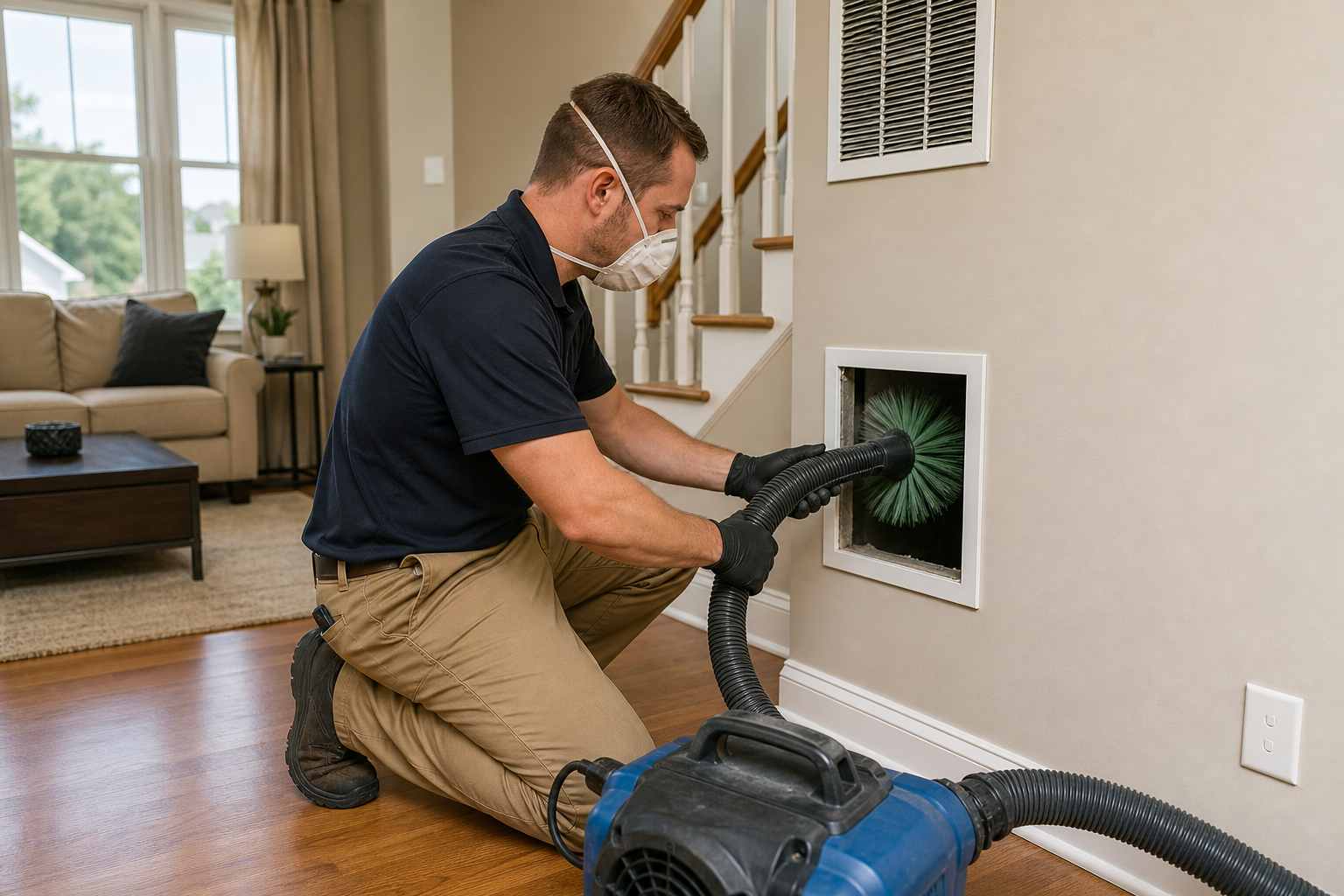
Here’s a mistake we see weekly in Pittsburgh homes from Squirrel Hill to Brookline: a homeowner schedules duct cleaning, the crew arrives with a Rotobrush or Nikro system, and nobody asks whether there’s a Honeywell F300 electronic air cleaner or an Aprilaire media filter sitting in the return plenum. They clean the ducts, pack up, and leave the most contaminated component in the entire system untouched. After 11 years of doing this work ourselves, we’ve learned that Honeywell equipment changes the job scope significantly — and most contractors don’t adjust for it.
How Honeywell Equipment Changes What’s Actually Dirty in Your Ducts
Honeywell whole-home air cleaners and electronic filters don’t just sit at the end of your ductwork — they become the primary accumulation point for everything your system pulls from Pittsburgh’s air. Our region’s combination of river valley humidity, pollen-heavy springs, and residual industrial particulate means Honeywell electronic air cleaner cells in Pittsburgh homes often carry a heavier contamination load than the ducts themselves.
Here’s what accumulates differently:
- Electronic air cleaner cells (F300 series): These aluminum cells with ionizing wires capture particles electrostatically, but the collection surfaces themselves become coated with a conductive layer of dust, pollen, and moisture-driven microbial growth. During duct cleaning, the cells must be removed, cleaned separately with a foaming agent safe for electronic components, and fully dried before reinstallation — a step that adds 30–45 minutes to the job but prevents arcing and reduced efficiency.
- Media filter housings (F100/F200 series): The housing frame and gasket seals trap bypass debris that never reaches the filter media. A technician working with Nikro negative-pressure equipment needs to establish seal integrity around these housings or contamination will simply recirculate through gaps.
- Return plenum integration points: Honeywell units mount directly in the return ductwork, creating turbulence zones where debris settles behind and below the unit. Standard duct cleaning that doesn’t disassemble the mounting frame misses this entirely.
We pulled a system apart last month in a Mount Lebanon rancher where the previous duct cleaner had never touched the F300 cell in six years of “annual cleanings.” The cell weighed nearly double its dry weight from accumulated crud, and the homeowner’s allergy symptoms had persisted despite supposedly clean ducts.
Honeywell Zoning Systems and the Access Problem
Pittsburgh’s older housing stock — particularly the brick foursquares in Lawrenceville and the post-war splits in Dormont — increasingly uses Honeywell zoning systems to manage uneven heating and cooling across multiple stories. These systems install motorized dampers in the ductwork, controlled by zone panels that communicate with Honeywell thermostats.
From a duct cleaning perspective, this creates a structural challenge: dampers segment the duct network into isolated zones, and a technician using Rotobrush agitation with Nikro vacuum extraction needs damper positions that allow full-system airflow during cleaning. If zone dampers remain in their normal closed positions, entire branches of ductwork receive no agitation and no negative pressure.
What this means practically:
- The technician should manually override dampers to fully open before cleaning begins, or use the Honeywell zone panel’s test mode to force open all dampers simultaneously.
- Zone controller wiring near duct access points must be protected from brush contact — we’ve seen damper actuators damaged by careless brush operators who didn’t identify the low-voltage harness.
- Post-cleaning, damper operation should be verified zone-by-zone before the technician leaves, ensuring the cleaning process hasn’t dislodged wiring or shifted damper blade alignment.
Most Pittsburgh homeowners don’t realize their zoning system affects cleaning completeness until they notice one floor still smells musty after the job. Ask directly: “How will you handle my zone dampers during the cleaning?” If the answer is a blank stare, keep looking.
Pre-Cleaning Settings: Protecting Your Honeywell Components
Before any duct cleaning begins on a Honeywell-equipped system, several thermostat and ventilation settings need adjustment. This isn’t busywork — it’s protection for electronic components that can be damaged by the high airflow and particulate disturbance of professional cleaning.
Here’s what we adjust on every Honeywell-equipped job in Pittsburgh:
- Thermostat to OFF, not just temperature hold: Prevents the system from cycling on during cleaning, which would pull loosened debris through electronic air cleaner cells and potentially foul the ionizing wires.
- Fan setting to ON if electronically controlled: For systems with Honeywell ventilation controllers, we verify the fresh air damper is closed to prevent outside particulate from entering during the cleaning process — particularly relevant in Pittsburgh’s pollen seasons or during Allegheny County air quality alerts.
- Electronic air cleaner power disconnected at the unit: Not just at the thermostat. The internal transformer remains live if only the thermostat is off, and wet cleaning agents near live components create both shock hazard and equipment damage risk.
- UV or photocatalytic accessories powered down: If your Honeywell system includes air treatment accessories, these need cooling-off time before duct access — hot quartz UV sleeves can crack if disturbed immediately after operation.
A contractor who walks in and starts cutting access holes without checking these settings is treating your system like a generic install. Honeywell’s integration depth deserves more respect than that.
What to Ask Before Hiring: A Honeywell-Specific Checklist
After 482 reviews and 11 years of owner-operated work, we’ve learned that the right questions reveal contractor competence faster than any credential claim. For Pittsburgh homeowners with Honeywell equipment, these five questions separate specialists from generalists:
- “Have you cleaned electronic air cleaner cells before, and what cleaning agent do you use?” Look for specific answers — foaming degreaser, never pressure washing, drying time requirements. Vague answers mean they’ve probably skipped this step on past jobs.
- “How do you verify damper operation on zoned systems after cleaning?” They should describe manual testing or zone panel verification, not just “we turn the system back on.”
- “What do you reconnect and test before leaving?” The answer should include cell electrical connections, housing gasket integrity, and thermostat programming restoration — not just “we put everything back.”
- “Do you carry replacement media for Honeywell F100/F200 housings?” A technician who stocks 16x25x4 or 20x25x4 Honeywell-compatible media can replace your filter immediately post-cleaning, when the system needs it most.
- “How do you handle the wiring harness on zone dampers during brush insertion?” This is a trick question for most contractors — the right answer involves identification, protection, and post-job verification of low-voltage connections.
When to call a pro: If your Honeywell electronic air cleaner hasn’t been removed and cleaned in over two years, or if you’re experiencing persistent allergy symptoms despite filter changes, the contamination has likely migrated past the filtration point into the duct system itself. That’s beyond DIY maintenance.
Related services in Pittsburgh: We also handle Air Duct Cleaning in McKeesport, Dryer Vent Cleaning in McKeesport, and HVAC Cleaning in McKeesport for homeowners throughout the Mon Valley.
Post-Cleaning Maintenance: Keeping Honeywell Systems Performing
The day after cleaning is when your Honeywell equipment actually starts working properly again — and when most homeowners forget about it until the next crisis. Here’s the maintenance rhythm we recommend for Pittsburgh’s climate:
- Electronic air cleaner cells: Wash every 3–4 months during heating and cooling seasons, every 6 months during shoulder seasons. Pittsburgh’s humidity means cells dry slowly — we recommend a 24-hour drying period before reinstallation, or running the cell through a dishwasher cycle without detergent if the manufacturer permits.
- Media filters (F100/F200): Replace every 6–12 months depending on MERV rating and household factors — pet owners in Pittsburgh’s pollen corridor (we’re looking at you, South Hills gardeners) should lean toward the shorter interval. Never exceed 12 months; compressed media collapses and bypasses.
- Post-cleaning system monitoring: Honeywell thermostats with air quality monitoring features (like the T10+ with room sensors) will show baseline improvement within 48 hours of proper duct cleaning. If your VOC or particulate readings don’t trend downward, either the cleaning was incomplete or there’s a source contamination issue (crawlspace return leakage, disconnected duct in an unconditioned attic) that needs addressing.
We worked with a family in Fox Chapel last spring whose Honeywell Lyric system’s air quality alerts had persisted through two previous duct cleanings. The issue wasn’t the ducts — it was a disconnected return in the stone basement pulling radon-laden air directly into the system. Clean ducts can’t compensate for bad building science. That’s why our scope includes duct repair and sealing, not just surface cleaning.
The Bottom Line
Honeywell equipment integration changes duct cleaning from a simple vacuum job into a system-aware service. The electronic components, zone controls, and filtration housings that make Honeywell systems effective also create contamination patterns and access challenges that generic contractors miss. In Pittsburgh’s older housing stock with its humidity swings and particulate load, these misses have real consequences for the air your family breathes.
Key takeaways:
- Honeywell electronic air cleaner cells require separate removal, foaming clean, and full drying — not just duct vacuuming.
- Zone dampers must be forced open and verified post-cleaning, or entire duct branches remain dirty.
- Thermostat and ventilation settings need specific pre-cleaning adjustment to protect live components.
- Contractor vetting should include Honeywell-specific experience questions, not just general duct cleaning claims.
- Post-cleaning maintenance intervals are shorter than most homeowners realize, especially in Pittsburgh’s climate.
If you’re in Pittsburgh and want a technician who understands Honeywell systems from the inside out — because he’s the same person who answers your call, runs the equipment, and stands behind the work — Meridian Air Duct Cleaning Service Greater Pittsburgh offers free estimates. Call (866) 402-3567 and ask for Eric. I’ll walk through your specific Honeywell setup before we schedule, so you know exactly what the job includes.
Frequently Asked Questions
Expect $350–$800 depending on system size, number of Honeywell components, and whether zoning dampers require manual override. Electronic air cleaner cell cleaning adds 30–45 minutes of labor. Homes in Pittsburgh’s North Hills or South Hills with multiple zones and whole-home filtration typically land in the $550–$700 range. Call (866) 402-3567 for an exact quote — estimates are free.
Yes — remove the cells every 3–4 months, soak in warm water with mild degreaser, rinse thoroughly, and allow 24 hours to dry completely before reinstalling. Never reinstall damp cells; the conductivity of residual moisture causes arcing and potential control board damage. For the ductwork itself and the housing behind the unit, professional equipment like our Rotobrush and Nikro systems reaches contamination you can’t access with household tools.
Three common causes: the electronic air cleaner cell wasn’t cleaned and is still saturated with particulate; zone dampers weren’t fully opened during cleaning, leaving dirty branches; or there’s a building envelope issue (disconnected return, crawlspace leakage) introducing fresh contamination. We verify all three before leaving any job — and we’ll tell you if the problem isn’t in the ducts at all.
Every 3–5 years for ductwork, with Honeywell electronic air cleaner cell maintenance every 3–4 months and media filter replacement every 6–12 months. Pittsburgh’s river valley humidity and pollen loads push toward the shorter intervals. Homes with pets, recent renovations, or occupants with respiratory sensitivities should consider duct cleaning every 2–3 years. Call (866) 402-3567 and we’ll assess your specific system setup and household factors.
Written by Eric Bailey, Owner & Lead Technician at Meridian Air Duct Cleaning Service Greater Pittsburgh, serving Pittsburgh since 2015.
Need Air Duct Cleaning Help?
Call Meridian Air Duct Cleaning Service Greater Pittsburgh — licensed & insured, here with fast after-hours help in Pittsburgh.
(866) 402-3567