
Emergency Air Duct Cleaning Near Me: What Pittsburgh Homeowners Should Do First
If you’re searching “emergency air duct cleaning” in Pittsburgh at 11 PM, something serious happened in your house today. Before you call any contractor, you need to complete a specific triage sequence in the next hour — actions that protect your insurance claim, limit cross-contamination, and ensure the duct cleaning that follows actually solves your problem instead of spreading it. If you’d rather not handle this alone, call Meridian Air Duct Cleaning Service Greater Pittsburgh home at (866) 402-3567 — we walk Pittsburgh homeowners through this exact process before we ever schedule a visit.
Here’s the mistake we see constantly: homeowners conflate the immediate emergency — sewage backing up through a floor drain, smoke pouring from a kitchen fire, water flooding the basement — with the duct contamination that results from it. They’re two separate problems requiring two separate responses. Rush to the wrong solution, and you’ll pay twice while your indoor air stays compromised.
What to Do in the First Hour After a Contamination Event
The hour after a flood, fire, or sewage backup determines everything that follows. We’ve arrived at Pittsburgh homes where well-meaning homeowners made the contamination worse by skipping these steps.
Step 1: Stop the source and ventilate strategically. Shut off water at the main if flooding continues. Open windows on opposite sides of the affected area for cross-ventilation — but do not run your HVAC system. Running the furnace or AC will pull contaminated air through every duct in your house. In Pittsburgh’s older housing stock, particularly in neighborhoods like Lawrenceville and Bloomfield where balloon framing is common, that contamination travels fast between floors.
Step 2: Document everything before touching anything. Photograph standing water, visible sewage, soot patterns on walls, and any debris in vents or returns. Insurance adjusters in Pittsburgh see dozens of claims weekly; organized documentation speeds approval. Note the time you discovered the damage and any immediate actions taken.
Step 3: Seal affected vents temporarily. Cover floor registers and wall vents in contaminated rooms with plastic sheeting and painter’s tape — not duct tape, which leaves residue that complicates professional cleaning later. This prevents debris from settling deeper into your ductwork while you arrange proper remediation.
One thing we pulled from a Squirrel Hill job last spring: the homeowner had run their furnace fan “to dry things out” after a washing machine overflow. That decision distributed moisture and mold spores through 40 feet of ductwork that would’ve stayed clean. Don’t be that homeowner.
Emergency vs. Urgent: Knowing Which Situation You’re In
Not every duct contamination scenario requires a midnight phone call. Understanding the difference saves you money and ensures appropriate response.
True emergencies requiring immediate professional response:
- Raw sewage entering ductwork through floor drains or backed-up lines
- Active fire with smoke residue visible in vents or returns
- Standing water in basement with HVAC equipment submerged
- Visible mold growth spreading from ducts into living spaces
Urgent situations that can wait for scheduled service:
- Post-renovation dust events with visible debris in registers
- Musty odors without visible mold or moisture
- Pet dander accumulation after introducing new animals
- Routine cleaning after purchasing a previously owned Pittsburgh home
Pittsburgh’s climate complicates this distinction. Our summers hit 90°F with 70% humidity, and basements in neighborhoods like Swissvale and Wilkinsburg stay damp year-round. A “musty odor” in October might become a mold emergency by July if humidity control fails. When in doubt, describe your situation to a specialist rather than guessing.
How to Vet an Emergency Duct Contractor Under Time Pressure
The first company to answer your late-night call is rarely the right company. Here’s how to quickly assess qualifications when you’re stressed and the clock is running.
Ask these four questions before booking:
- “Will the owner or lead technician perform the work?” Many emergency services dispatch entry-level crews for after-hours calls. At Meridian Air Duct Cleaning Service Greater Pittsburgh home, Eric Bailey serves as Lead Technician on every job — the person with 11 years of hands-on expertise is the one who shows up, not a trainee working from a checklist.
- “What equipment will you use?” Legitimate emergency duct remediation requires more than a shop vacuum. Look for specific names: Rotobrush and Nikro systems are industry-standard for residential and commercial duct cleaning. Vague answers about “professional equipment” without naming manufacturers signal a company that may not own proper tools.
- “What documentation do you provide?” Post-event cleaning should include before-and-after photos, contamination assessment, and written scope of work. This documentation is essential for insurance submission and proves the work was actually performed to specification.
- “Do you handle insurance coordination directly?” Established Pittsburgh contractors understand local insurer requirements and can provide itemized invoices in formats adjusters expect. Fly-by-night operations often demand cash payment and leave you to fight reimbursement alone.
We’ve cleaned up after “emergency” contractors in McKeesport who ran a consumer-grade vacuum through visible registers and charged $800. The homeowner still called us two weeks later because the smell persisted. Proper emergency remediation takes time; anyone promising a 45-minute fix is cutting corners.
What Legitimate Emergency Duct Remediation Actually Looks Like
After a contamination event, thorough duct cleaning follows a specific protocol that goes far beyond vacuuming visible debris.
Assessment and containment: The technician should inspect your entire duct system with cameras, identify all affected runs — not just the obvious ones — and seal returns to prevent cross-contamination during cleaning.
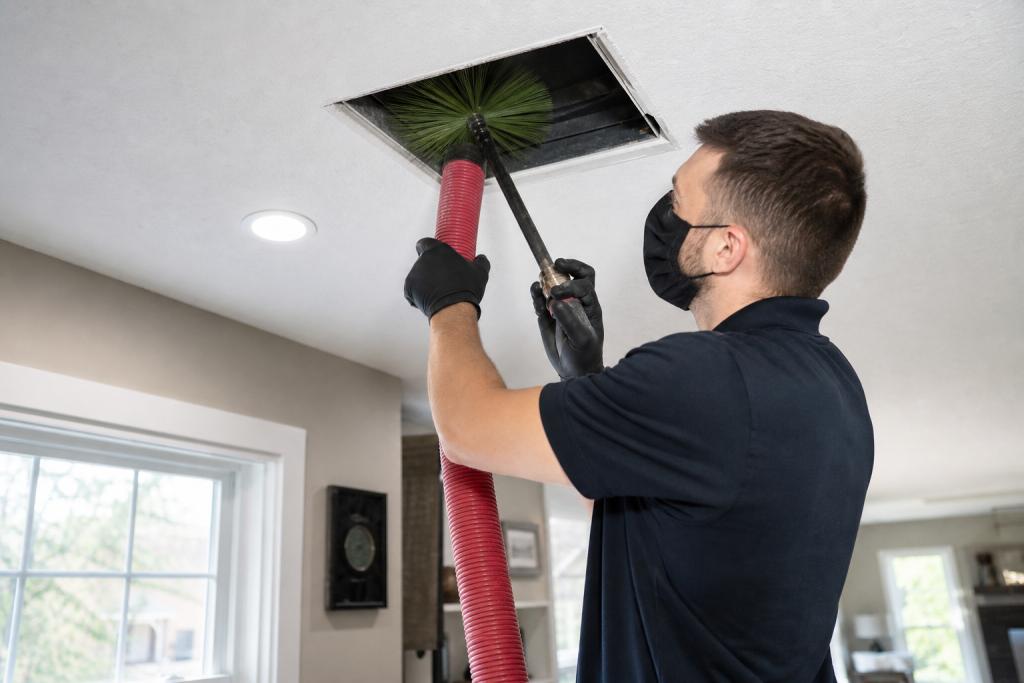
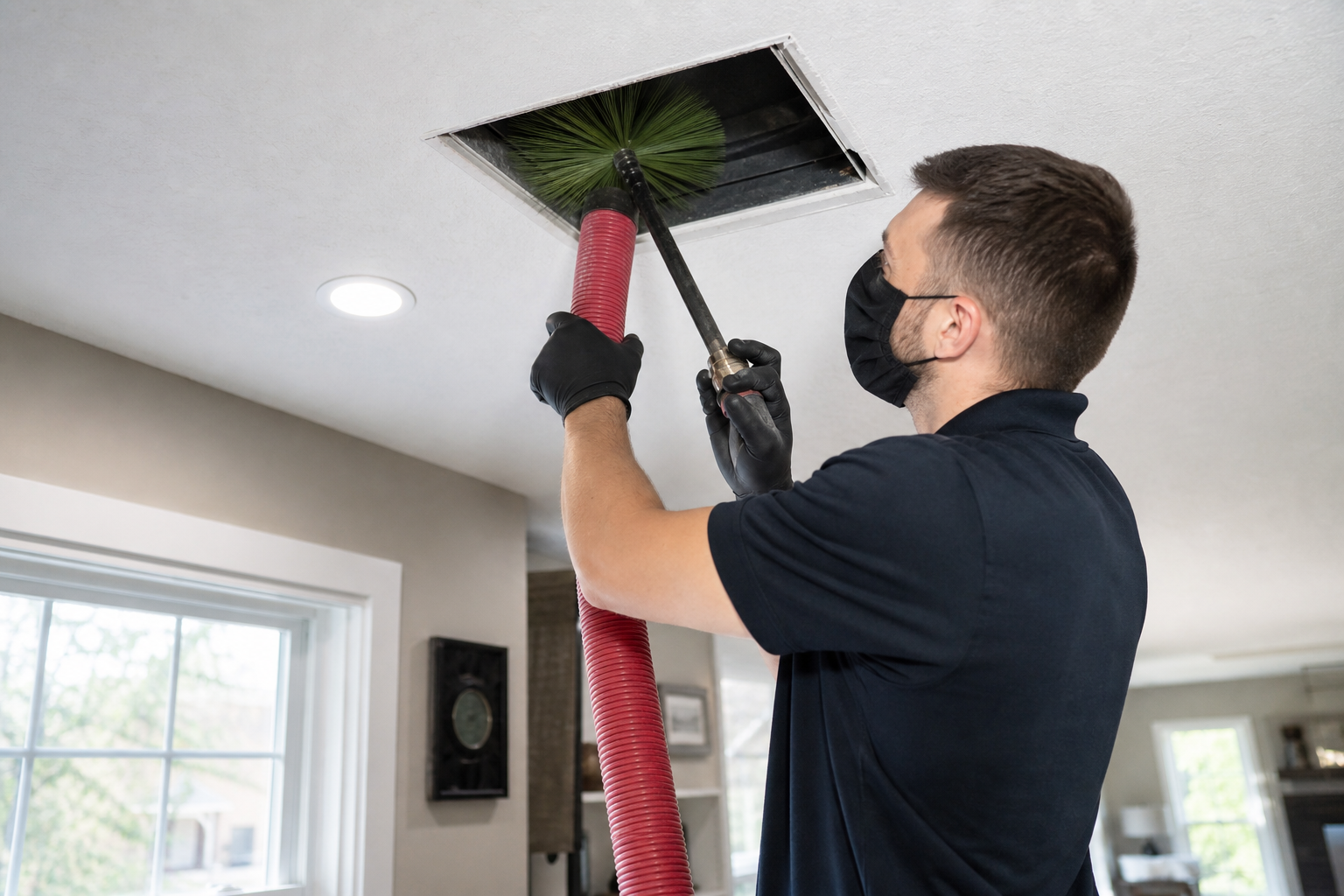
Source removal: Professional-grade equipment like Rotobrush systems with HEPA filtration agitates and extracts debris from duct walls without distributing it into your living space. For severe contamination, Nikro negative air machines maintain pressure differential so nothing escapes during the process.
Sanitizing and sealing: After physical removal, affected ducts should be treated with EPA-registered sanitizers. In Pittsburgh’s older homes with original galvanized ductwork, we often recommend duct sealing after cleaning — the same events that introduce contamination often reveal gaps and separations that admit future problems.
Verification: You should receive visual documentation of cleaned ducts, air quality readings if particulate testing was performed, and a written completion report. This isn’t paperwork for paperwork’s sake — it’s what your insurance company requires and what protects you if problems recur.
Our service scope spans cleaning, repair, sealing, and air quality sanitizing because we’ve learned that contamination events expose underlying system weaknesses. Addressing only the visible problem leaves the door open for recurrence.
Insurance Coordination for Pittsburgh Homeowners
Most homeowners’ policies cover duct contamination resulting from sudden, accidental events — but documentation and contractor selection significantly impact your reimbursement.
Document immediately: Photograph all damage before cleanup begins. Note dates, times, and any communications with your insurer. Pittsburgh adjusters working Allegheny County claims see frequent water and fire damage; clear documentation separates smooth claims from disputed ones.
Request written scope before work begins: Any contractor performing emergency remediation should provide itemized pricing and specific deliverables. Vague estimates like “clean ducts, $1,200” create problems during claim review. Itemization should distinguish between emergency mitigation (often covered) and improvement work (rarely covered).
Submit contractor documentation with your claim: Include the written scope, completion report, before-and-after photos, and any air quality test results. If your contractor used sanitizing products from recognized manufacturers like Abatement Technologies or Guardsman, note these — insurers recognize professional-grade protocols.
Understand your policy’s mold limitations: Many Pittsburgh homeowners discover too late that their policy caps mold remediation at $10,000 or excludes it entirely. If your contamination event involves moisture, ask your adjuster specifically about mold coverage before authorizing work that might exceed limits.
We’ve worked with Pittsburgh homeowners in neighborhoods from Shadyside to McKeesport navigating this process. The ones who document thoroughly and choose contractors who understand insurance requirements recover faster and more completely.
When to Call a Professional
If you’ve completed the first-hour triage and confirmed you’re dealing with true emergency contamination — sewage, active smoke residue, or submerged HVAC equipment — it’s time to call a specialist. Don’t run your system, don’t attempt DIY cleaning with household tools, and don’t assume the damage is limited to what you can see.
For urgent but non-emergency situations — post-renovation dust, musty odors, or routine cleaning after a home purchase — schedule during normal hours when you can vet contractors properly and avoid after-hours premiums.
Related services in Pittsburgh: If your emergency involves fire or flooding that affected your HVAC system directly, you may also need HVAC Cleaning in McKeesport or surrounding Pittsburgh areas. For dryer vent blockages that create immediate fire hazards, see our Dryer Vent Cleaning in McKeesport service.
The Bottom Line
Emergency air duct cleaning in Pittsburgh requires separating the immediate crisis from the contamination it causes, then choosing a contractor qualified for the actual scope — not just the one who answers fastest. Complete your first-hour triage, document thoroughly for insurance, and verify that any contractor you hire uses professional-grade equipment, provides written documentation, and has the experience to address root causes rather than symptoms.
If you’re in Pittsburgh and facing duct contamination from a flood, fire, or sewage event, Meridian Air Duct Cleaning Service Greater Pittsburgh home offers free estimates and can walk you through whether your situation requires emergency response or scheduled service. Call (866) 402-3567 — Eric Bailey will assess your specific situation and recommend the appropriate next steps.
Frequently Asked Questions
Emergency duct cleaning in Pittsburgh typically ranges from $800 to $2,500 depending on contamination type, system size, and whether HVAC components require cleaning. Sewage and fire remediation fall at the higher end due to sanitizing requirements and protective equipment needs. Standard residential systems with moderate contamination usually run $1,200–$1,800. Call (866) 402-3567 for an exact quote — estimates are free.
No — and attempting DIY cleaning after contamination events often makes the problem worse. Household vacuums lack HEPA filtration and will redistribute contaminants into your living space. More critically, you cannot assess hidden duct damage or properly sanitize without professional equipment. After events involving sewage or smoke residue, trained technicians with negative air containment and proper PPE are essential for safe remediation.
Most policies cover duct cleaning when contamination results from sudden, accidental events like burst pipes, appliance failures, or fire — but not from gradual issues like long-term neglect or normal wear. Documentation is critical: photograph everything before cleanup, obtain written scope from your contractor, and submit itemized invoices with completion reports. Coverage for mold resulting from water damage often has separate limits, so verify with your adjuster early.
True 24-hour emergency response is rare among duct specialists; most “emergency” services are HVAC generalists or restoration companies subcontracting duct work. Response time varies from 2–6 hours for dedicated providers to next-day for scheduled urgent service. Before accepting any timeline, verify who performs the work and what equipment they bring. A fast response with inadequate tools wastes money and time — we see the aftermath regularly in Pittsburgh homes where rushed cleaning required complete redo.
Written by Eric Bailey, Owner & Lead Technician at Meridian Air Duct Cleaning Service Greater Pittsburgh, serving Pittsburgh since 2015.
Need Air Duct Cleaning Help?
Call Meridian Air Duct Cleaning Service Greater Pittsburgh — licensed & insured, here with fast after-hours help in Pittsburgh.
(866) 402-3567